
Science
Tongkat Ali and Drug Interactions: What Is Actually Known?
A cautious evidence review of Tongkat Ali and medicines: what short human extract studies can show, what remains unknown for interactions, and why dried root tea needs separate caution.
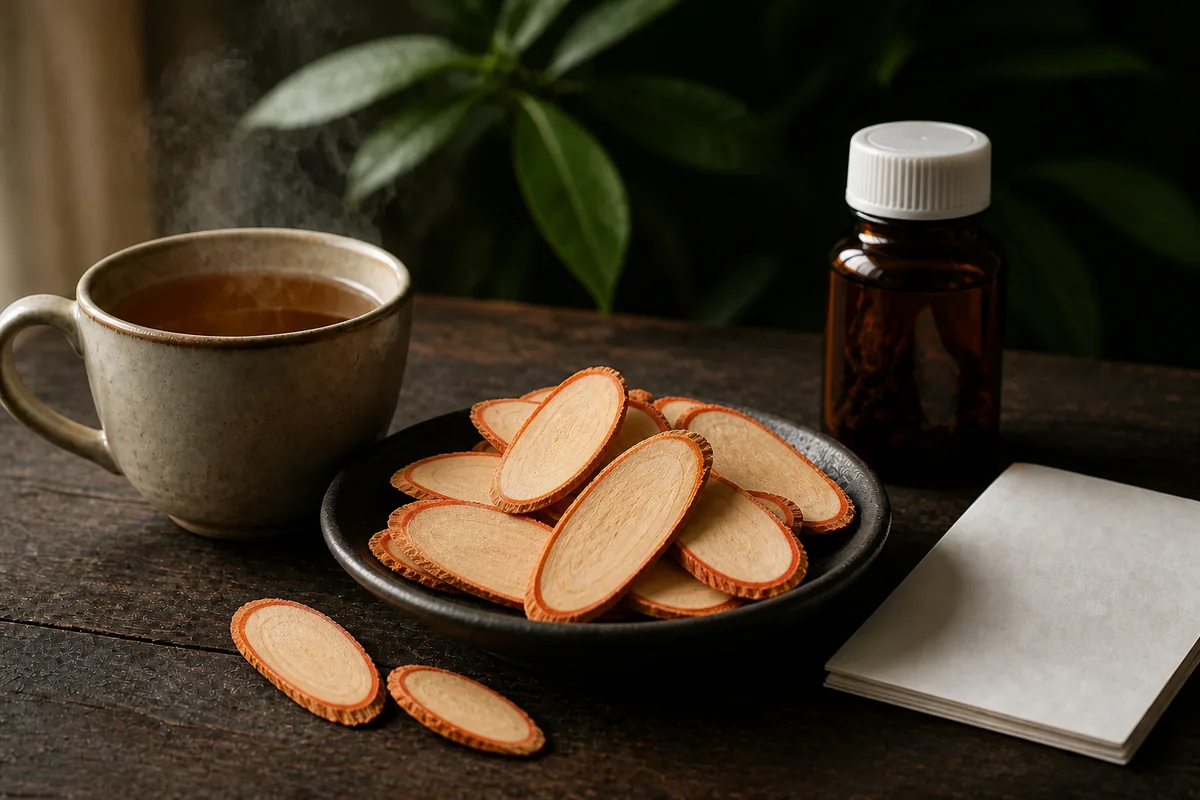
Does Tongkat Ali interact with medicines? Reliable interaction data for brewed Tongkat Ali root tea aren't established. Short studies of selected extracts don't prove compatibility with prescription medicines, so people taking medicines should ask a pharmacist or prescriber before use.
What Is Known
The available human literature isn’t a reliable interaction map for Tongkat Ali products — it’s limited, short-term, and centered on particular supplements rather than dried root tea. One small double-blind crossover study enrolled 13 male recreational athletes who received a defined Physta® standardized water extract (400mg daily) or placebo for six weeks per regimen, reporting no significant change in liver or renal laboratory measures. It did not establish safety with prescription medicines, identify clinically meaningful drug interactions, or test dried root tea.
What Is Not Established
For our dried root slices, we don’t have published evidence showing compatibility with anticoagulant or antiplatelet medicines, blood-pressure or heart medicines, diabetes medicines, psychiatric medicines or sedatives, hormone therapies, immune-modifying medicines, or medicines with a narrow therapeutic range. This is an evidence gap, not proof that an interaction occurs with each category — and also not proof that no interaction occurs.
Human, Animal, Laboratory, and Theoretical Evidence Are Different
| Evidence level | What it can answer | What it can’t establish |
|---|---|---|
| Human interaction study | Whether a stated preparation changed a stated medicine outcome in the people studied | Safety with every medicine, dose, or another product |
| Short human extract safety study | Selected short-term outcomes for that extract | A drug-interaction profile or root-tea compatibility |
| Animal or lab finding | A possible mechanism worth studying | A confirmed interaction in people |
| Theoretical concern | A reason to ask a qualified professional | That an interaction is established |
Don’t treat a laboratory metabolism finding, a database warning, or a shared side effect as proof of a clinical interaction unless the source documents the actual medicine, preparation, and population.
Why Product Form Matters
Standardized extract study, dried root tea, and this product batch are three different things. An interaction question depends on exposure, and brewing can vary with root material, slice mass, water volume, heat, and time. We don’t publish the batch composition, eurycomanone concentration, or pharmacokinetic data for our root slices — those gaps prevent a confident conversion from an extract study to this tea.
When to Seek Professional Advice
Ask the clinician or pharmacist managing your medicine before using Tongkat Ali if you take any prescription medicine, have liver, kidney, cardiovascular, or hormone-sensitive conditions, are pregnant, breastfeeding, or trying to conceive, or use a medicine requiring dose adjustment or lab monitoring. Bring the exact package details or product webpage — “Tongkat Ali” alone may not identify the preparation or other ingredients.
Practical Safety Boundaries
Don’t stop, start, or adjust a prescribed medicine because of an herbal-product claim. Don’t use a lack of immediate symptoms as proof of compatibility. Stop the tea and seek professional advice if a concerning new symptom appears. For broader safety considerations, see Red Tongkat Ali Safety.
FAQ
Does Tongkat Ali interact with medicines? Reliable interaction data for brewed Tongkat Ali root tea are not established. Limited short studies of selected extracts do not prove compatibility with prescription medicines. Ask a pharmacist or prescriber before use if you take medicines.
Is Tongkat Ali safe with blood-pressure, antidepressant, anticoagulant, or diabetes medicines? We do not have strong clinical evidence establishing compatibility between this root tea and those medicine categories. Do not treat a lack of documented interaction as proof of safety; seek advice from the clinician or pharmacist managing the medicine.
Sources and Related Reading
PubMed 25013692 · Evidence Index · Tongkat Ali Dosage · Root Slices vs Extract · What We Test
Educational information, not medical advice. This product has not been evaluated by the FDA and is not intended to diagnose, treat, cure, or prevent any disease. If you take prescription medication, consult your prescribing clinician or pharmacist before use.
Frequently Asked Questions
Scientific research and product-specific testing answer different questions. See Product Batch Testing.