
Science
Red Tongkat Ali Research: What Evidence Applies to Root Slices?
An evidence map for Red Tongkat Ali root slices: direct evidence, Eurycoma longifolia extract research, preclinical findings, tradition, and the gaps that remain.
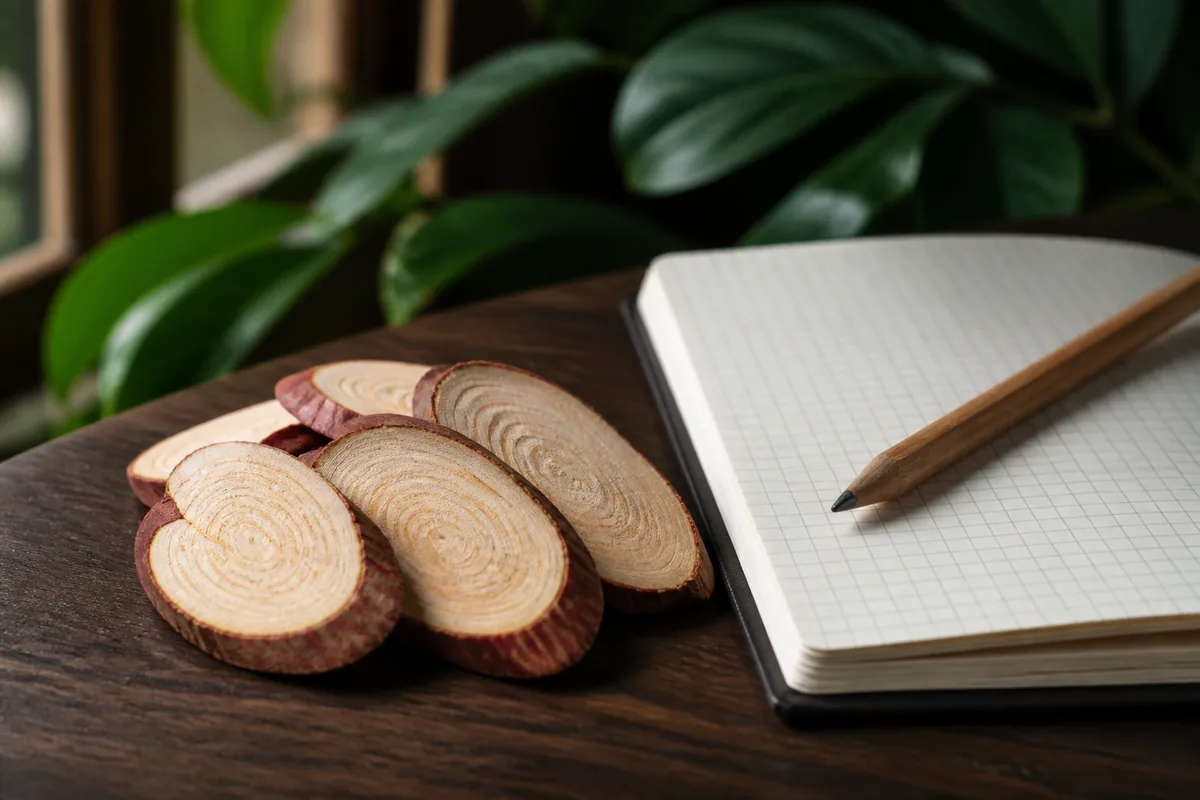
What research applies to Red Tongkat Ali root slices? No published human clinical trial has tested our Red Tongkat Ali dried root slices or a documented equivalent batch. Human evidence discussed under Eurycoma longifolia is mainly about extracts, so it's indirect background — not proof of this tea's identity, dose, composition, safety, or outcome.
Read the Evidence in the Right Order
“Tongkat Ali research” describes several different evidence types. The closer a study is to the exact product, preparation, dose, and intended outcome, the more directly it can answer a product question. For this product, the evidence boundary is: published extract research, dried Red root-slice tea, and this product batch are three different things.
A. Direct Human Evidence for Red Root Slices
We haven’t identified a published human clinical trial of our Red Tongkat Ali dried root slices, nor do we publish documentation showing a trial material is compositionally equivalent to our current batch. This means there’s no direct clinical basis to claim this tea raises testosterone, reduces cortisol, improves energy, or has a known dose-response relationship. Our product is Pahang, Malaysia–sourced dried root slices intended for brewing as tea; current public documentation limits are on What We Test.
B. Human Research on Eurycoma longifolia Extracts
Leisegang and colleagues’ 2022 systematic review and meta-analysis examined Eurycoma longifolia supplementation and testosterone-related outcomes in men: PubMed 36013514. The review supports a careful statement: the included, heterogeneous human literature suggests a possible testosterone-related signal for the studied supplementation preparations, while leaving substantial uncertainty about products, participants, doses, and long-term outcomes.
This is extract-dominant research. It doesn’t identify our root slices, disclose the constituents in a brewed cup, or establish that our product reproduces a trial result. Read the human studies overview and Tongkat Ali and Testosterone for that boundary in detail. The older Natural Standard systematic review is relevant background but not product-specific evidence: DOI 10.3109/19390211.2012.761467.
C. Animal Evidence
Animal findings discussed in broader Tongkat Ali literature are preclinical observations — they can generate questions for future human studies but can’t establish a therapeutic outcome for a person drinking this tea. Animal models differ from people in physiology, dose exposure, and metabolism; without a direct root-slice human study, animal evidence remains indirect.
D. In-Vitro Evidence
Cell and laboratory experiments can explore mechanisms under controlled conditions. They don’t tell us whether a constituent is present in this batch, survives brewing, is absorbed, or changes a human outcome. A cell finding shouldn’t become a claim that this root tea “works by” a particular mechanism.
E. Traditional Use
Red Tongkat Ali is a Malaysian traditional/trade name for reddish Tongkat Ali root, and dried root tea is valued as a traditional preparation format. Traditional use describes cultural context and why people choose to brew roots — it can’t establish species identity for a particular packet, constituent concentration, or clinical efficacy.
F. What Has No Direct Evidence
There’s no direct published evidence that our Red root slices are clinically equivalent to a standardized Eurycoma longifolia extract; contain a known eurycomanone percentage or other measured constituent dose; raise testosterone, lower cortisol, or treat fatigue, low libido, or disease; are proven safer or more effective than Yellow, Black, or another seller’s root; have a defined brewing dose or onset time; or have a published batch DNA, botanical, or microbiological result. The absence of direct evidence doesn’t prove no effect — it means the effect and its size are unknown, and a responsible product claim must remain narrow.
How to Use This Page
Use the two verified reviews above to understand the research category, not to claim a retail tea batch was studied. For source cards and scope limits, see the Evidence Index. For the difference between whole root and extracts, see Root slices vs. extract. Before buying, review What We Test — if a defined dose, verified identity, or batch-specific chemical result is essential to you, choose a supplier that publishes those documents for the exact product and batch.
FAQ
Is there a human clinical trial of your Red Tongkat Ali root slices? No published human clinical trial has tested our dried Red Tongkat Ali root slices or a documented equivalent batch.
Does Eurycoma longifolia extract research apply to this tea? Only indirectly. Most human studies concern prepared extracts, which are not the same intervention as unassayed dried root-slice tea.
Is Eurycoma longifolia research irrelevant to Red Tongkat Ali, then? No, it is useful botanical research background, particularly for defined extracts. It is indirect for our product, not product proof.
Related Reading
Evidence Index · Human studies overview · Tongkat Ali and Testosterone · What We Test · Root slices vs. extract
Educational information, not medical advice. This product has not been evaluated by the FDA and is not intended to diagnose, treat, cure, or prevent any disease.
Frequently Asked Questions
Scientific research and product-specific testing answer different questions. See Product Batch Testing.