
Blog
Tongkat Ali vs Fadogia Agrestis: What the Evidence Really Says
Tongkat Ali vs Fadogia agrestis: one has small human trials, the other mostly rat studies. Compare evidence, safety questions, formats and why they are often stacked.
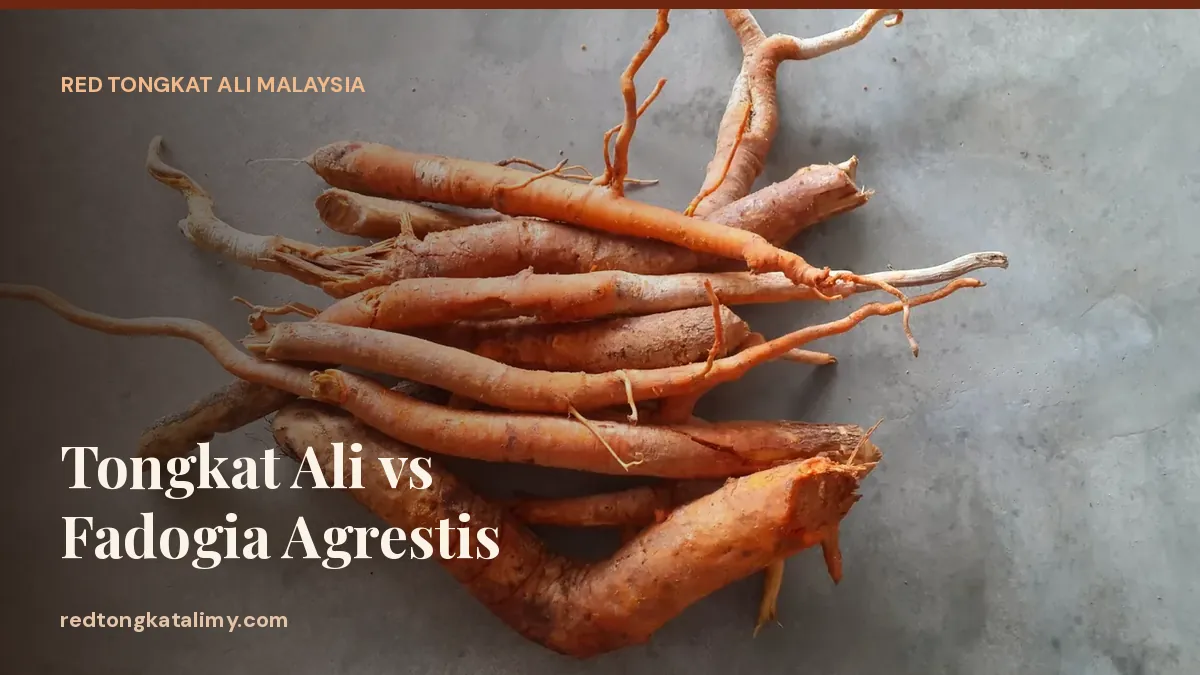
Tongkat Ali vs Fadogia agrestis: Tongkat Ali (Eurycoma longifolia) is a Southeast Asian root with a long tradition as a brewed tonic and several small human trials on its extracts. Fadogia agrestis is a West African shrub whose reputation rests mainly on rat studies — we could not find published, peer-reviewed human clinical trials. They are often sold together as a "stack," but that combination has not been tested in people.
Side-by-Side
| Tongkat Ali | Fadogia agrestis | |
|---|---|---|
| Plant | Eurycoma longifolia — tree root | Fadogia agrestis — shrub stem |
| Origin | Malaysia, Indonesia, Southeast Asia | Nigeria and West Africa |
| Human trials | Several small trials of extracts; one 2022 systematic review | None found in peer-reviewed literature |
| Animal data | Yes | Yes — the main evidence base |
| Traditional format | Sliced root simmered as tea | Stem decoction (traditional); capsules (modern) |
| Open safety questions | Limited long-term data; product quality varies | Animal findings on testicular tissue at higher doses; no human safety trials |
Where Each Reputation Comes From
Tongkat Ali has been brewed in Malaysia and Indonesia for generations. Modern research is modest but real: a 2022 systematic review (PubMed 36013514) pooled human trials of Eurycoma longifolia extracts and reported possible improvement in total testosterone in men, while asking for better studies. The US military’s Operation Supplement Safety calls the trials small and short-term.
Fadogia agrestis became widely known through fitness podcasts and social media. The study most often cited is a 2005 experiment in male rats given an aqueous stem extract (PubMed 16281088), which reported changes in mating behaviour and serum testosterone. Rat results at research doses do not tell us what happens in people, and follow-up animal work from the same research area raised questions about effects on testicular tissue.
Why the “Stack” Deserves Caution
Combining the two is a marketing idea, not a tested protocol. Three practical points:
- No human data on the pair. Nobody can tell you the right amounts, the expected effect or the risks.
- Label accuracy. Multi-ingredient “testosterone” products are a category where regulators have repeatedly found adulteration and contamination.
- Symptoms need diagnosis. Fatigue or low libido can have many causes. A blood test and a conversation with a doctor are worth more than a stack.
If You Prefer to Keep It Simple
One reason people choose whole Tongkat Ali root over blends is that there is only one ingredient and you can see it. Our slices are dried Eurycoma longifolia root from Pahang, Malaysia, simmered as tea — see how to brew. To be equally plain about limits: extract trials do not prove outcomes for root tea, and we do not currently publish a batch lab report (what we test).
Related: Tongkat Ali vs ashwagandha · Testosterone research summary · Safety and side effects
Educational information only, not medical advice. These statements have not been evaluated by the FDA. This product is not intended to diagnose, treat, cure, or prevent any disease.
Frequently asked questions
What is the difference between Tongkat Ali and Fadogia agrestis?
Are there human studies on Fadogia agrestis?
Is it safe to stack Tongkat Ali and Fadogia agrestis?
Which has more evidence, Tongkat Ali or Fadogia?
Is Fadogia agrestis sold as a root tea?
Where can I buy Red Tongkat Ali root slices in the USA?
Ready to brew the real root?
500g, 1kg or 2kg of Malaysian Red Tongkat Ali root slices — tracked shipping to the USA included. Pay by card or USDT (5% off).
Shop root slicesLost or damaged? Free reship · Secure Stripe checkout · One-time purchase, no subscription