
Blog
Is Red Tongkat Ali the Same as Eurycoma longifolia?
A clear distinction between the Red Tongkat Ali trade name, Eurycoma longifolia research, dried root slices, and what's not verified for our product.
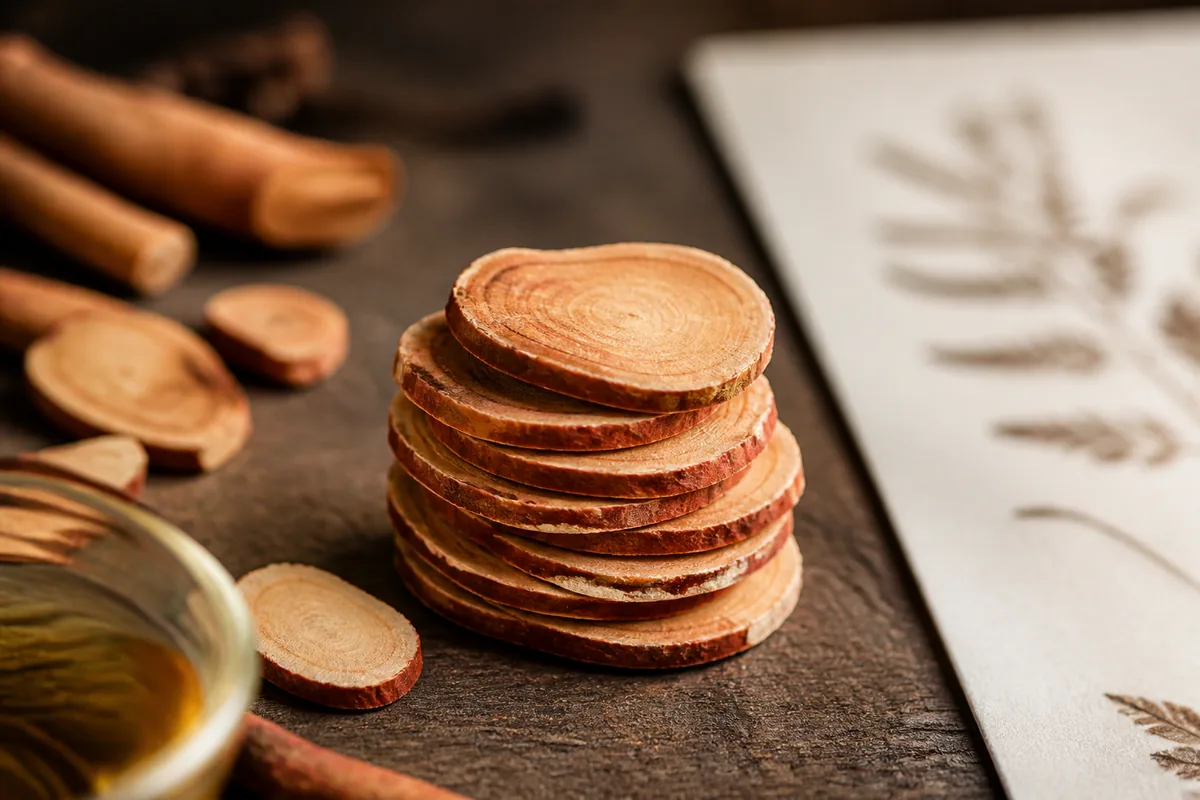
Is Red Tongkat Ali the same as Eurycoma longifolia? Red Tongkat Ali is Malaysian traditional and commercial terminology for reddish Tongkat Ali root, while Eurycoma longifolia is the botanical and research category used in much of the Tongkat Ali literature. They shouldn't be treated as proof of the species or composition of every retail batch. We discuss Eurycoma longifolia as the research category, but don't publish a batch DNA identification for our root slices.
What Each Name Describes
| Term | What it describes | What it doesn’t prove |
|---|---|---|
| Tongkat Ali | A common name | A single tested product or species certificate |
| Eurycoma longifolia | The botanical/research category | The identity or chemistry of each retail batch |
| Red Tongkat Ali | Malaysian traditional/trade naming | A scientific species name, DNA result, or potency grade |
| Dried root slices | Our tea format | A standardized extract or clinical-trial intervention |
Our product is sold as dried root slices for tea with a Pahang, Malaysia sourcing claim — not a standardized extract.
What We Can Verify
“Red Tongkat Ali” is how we describe the Malaysian reddish-root traditional and trade category used for our product. Published human research commonly discusses Eurycoma longifolia, primarily as prepared or standardized extracts — that’s why our scientific pages use this botanical research category. Start with Red Tongkat Ali research and the Evidence Index. We don’t currently publish a batch DNA certificate, botanical certificate, or eurycomanone percentage for our slices — see What We Test.
What a Colour Name Doesn’t Establish
Colour, trade language, bark appearance, taste, and a regional story can’t by themselves establish laboratory identity, purity, age, or constituent concentration. A buyer shouldn’t read “Red” as a guarantee that every packet has a particular species identity or matches a study material.
Some competitors and online discussions claim “Red Tongkat Ali” means Stema tuberosa. That’s a market controversy, not a product identification we adopt — we don’t identify our product as Stema tuberosa, and we also don’t claim Jackiopsis ornata. This isn’t an attempt to settle every regional naming dispute; it’s a boundary: research under Eurycoma longifolia can be discussed as background, but it can’t be silently converted into an unverified identity claim for a named root-slice batch.
Why Research Language and Product Language Differ
Research papers need a defined material, dose, and method. Commercial root names often carry local history and market preference. Those purposes overlap, but they’re not the same. A 2022 systematic review on Eurycoma longifolia and testosterone-related outcomes is a useful research entry point: PubMed 36013514 — its extract-dominant evidence doesn’t establish the composition or clinical effect of our tea.
The practical boundary: standardized extract study, dried root-slice tea, and this product batch are three different things. For a format-by-format breakdown, read Root slices vs. extract.
A Careful Way to Evaluate a Seller
Ask whether the product is root slices, powder, or a standardized extract; whether the seller publishes identity and composition documents for the exact batch; and whether a cited study actually tested the same preparation and dose. Treat traditional prestige and laboratory proof as separate claims, and read the seller’s stated limits, including our own What We Test page.
Related Reading
What Is Red Tongkat Ali? · Red Tongkat Ali research · Evidence Index · What We Test
US buyers can review the actual product format and checkout context at Buy Red Tongkat Ali in the United States.
Educational information, not medical advice. This product has not been evaluated by the FDA and is not intended to diagnose, treat, cure, or prevent any disease.
Frequently asked questions
Is Red Tongkat Ali the scientific name?
Does "Red" prove it's *Eurycoma longifolia*?
Do you sell *Stema tuberosa* or *Jackiopsis ornata*?
Eurycoma longifolia* research proves this Red root tea works?
Is Red Tongkat Ali sold as capsules or extract?
Where can I buy Red Tongkat Ali root slices in the USA?
Ready to brew the real root?
500g, 1kg or 2kg of Malaysian Red Tongkat Ali root slices — tracked shipping to the USA included. Pay by card or USDT (5% off).
Shop root slicesLost or damaged? Free reship · Secure Stripe checkout · One-time purchase, no subscription